Faith and a Nurse Navigator Meet the Needs of a Breast Cancer Survivor
Kathy, 71, started journaling after a breast cancer diagnosis in January of 2025.
She got the idea from her mom, who died from breast cancer at the age of 67 and left many handwritten notes in her Bible.
One of her mom's notes resonated.
Loneliness is the evidence that I was expecting others to meet my needs as only God can.
Kathy recalled from a note her mother wrote.
Kathy wanted her children to have something that might help them one day too.
They need to know the things I went through and who God is in the midst of all of it,
Kathy said.
Kathy was diagnosed with invasive ductal carcinoma, a common type of breast cancer where cancer cells have moved beyond the milk ducts into nearby breast tissue. She was also diagnosed with DCIS, or ductal carcinoma in situ, an early form of breast cancer where abnormal cells are still contained inside the milk ducts.
Before that diagnosis was confirmed, Kathy’s first interaction was with Dr. Melinda Coker, a dedicated breast radiologist at the Ross Breast Center.
Because the center’s radiologists focus 100 percent on breast imaging, rather than dividing their time between general X‑rays or CT scans, Dr. Coker was able to provide care that never felt rushed.
When delivering the initial findings, Dr. Coker took her time, explained what she was seeing, and even asked if she could pray with Kathy.
She gave me her time. I didn’t feel like she had one hand on the doorknob ready to go out the door,
Kathy said.
A Lifeline in an Overwhelming Journey
A cancer diagnosis alone is a lot to take in. Kathy was not prepared for the many appointments, locations, and schedules she would also need to manage.
It was quite overwhelming. This is all so very new to me.
— Kathy, journal entry from 2025
When Kathy helped a friend through cancer by attending appointments with her, she saw firsthand how easily details of care could fall through the cracks. But Kathy had help, a breast cancer nurse navigator at the Ross Breast Center.
I advocated for my friend, but they didn’t have an official person. And boy, when I found out about Gigi, I was so grateful.
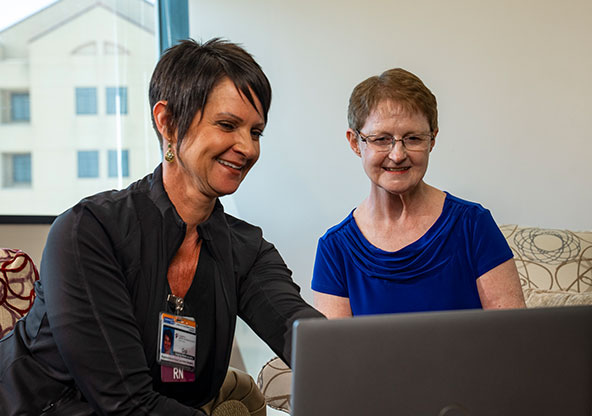
Gigi Lewis, the nurse navigator at the Ross Breast Center, is an experienced nurse who helps patients understand their diagnosis and coordinates next steps in care. Nurse navigators explain what’s happening, schedule appointments, answer questions, and make sure nothing falls through the cracks when patients feel overwhelmed.
My primary role is to help our breast cancer patients navigate their next steps in treatment. I tell patients, ‘You are always welcome to call me. I’m a point of contact, a source of support, and certainly an advocate for you,
Gigi said.
Advocacy and Action in Critical Moments
Research published in the Journal of Oncology Practice shows that cancer patients who are assigned a nurse navigator experience a significant decrease in emergency room visits.
By proactively managing symptoms and streamlining communication across large care teams, nurse navigators help patients get the right care before situations become emergencies.
That support made a difference for Kathy. One weekend, she became extremely sick and wasn’t sure who to call.
Should she reach out to her primary care doctor, her medical oncologist, or the radiation team? Should she just go to urgent care?
Instead, she emailed Gigi on a Saturday.
Within an hour and a half, she had an appointment scheduled with my surgeon. I didn’t even think about contacting my surgeon,
Kathy said.
Nurse navigators are a required part of accreditation through the American College of Surgeons’ National Accreditation Program for Breast Centers.
A Streamlined Approach to Breast Health
When someone is referred to the Ross Breast Center with a breast concern, diagnostic imaging is typically the first step.
Once imaging is completed, the radiologist makes recommendations, and the nurse navigator helps carry out next steps.
Rather than sending patients back and forth between different offices or primary care providers, the breast care team coordinates care directly.
We found that this approach reduces delays in care and confusion, especially since breast cancer is a highly specialized area and overwhelming for our patients,
Dr. Tyler Leete said.
Some patients may simply need reassurance and a follow-up exam in a few months. Others may need additional testing, a biopsy, or further treatment planning.
When cancer is diagnosed, nurse navigator Gigi helps guide patients through the next phase of care, ensuring they understand what’s next and have the support they need.
Looking Back with Gratitude
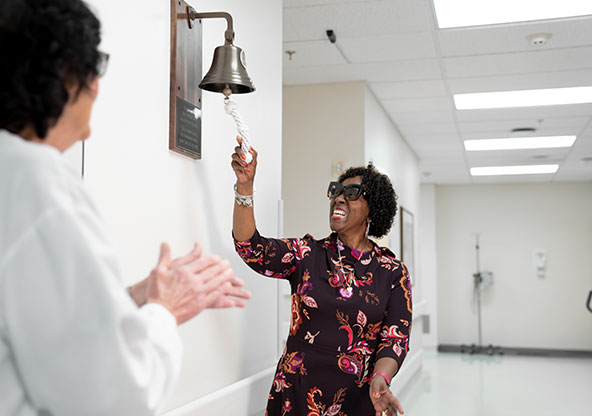
Today, having successfully navigated her treatment, Kathy is officially on the other side of her diagnosis. Passing the age of 67, the age her mother was when she lost her 12‑year battle with the same disease, was a heavy milestone, but one filled with profound gratitude.
Looking back on the whirlwind of appointments, surgeries, and treatments, Kathy sees a clear picture of grace.
I learned that when I was feeling like I wasn’t capable, that God was capable.
Now, Kathy hopes her journal will be both a legacy for her children and a beacon for other women standing at the beginning of a daunting road. Her advice for anyone facing a new breast cancer diagnosis is simple: trust your team, advocate for yourself, and lean on your faith.
"Go to Ross and get in the CHRISTUS system. They are wonderful, and they are available to help you," Kathy said. "Ask questions, keep a journal, and look at who God is in the midst of your situation."
Schedule Your Mammogram at the Ross Breast Center
You have multiple convenient ways to schedule your mammogram at the Ross Breast Center. Choose the option that works best for you.